

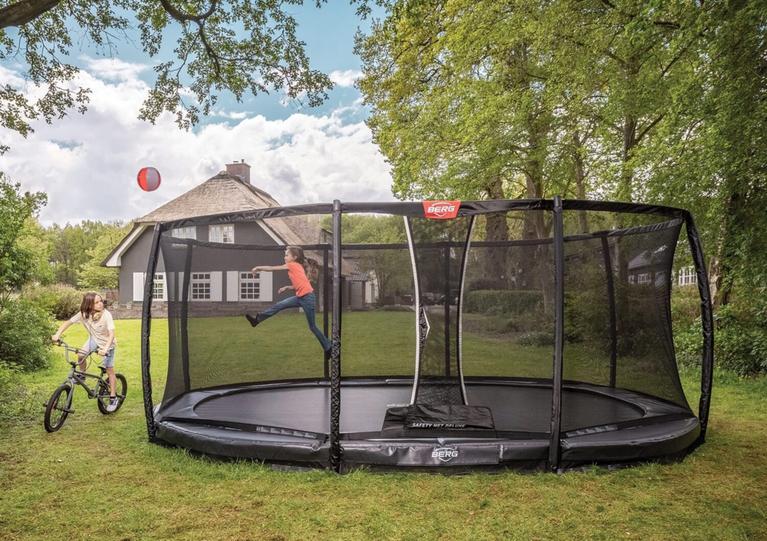
A BERG trampoline guarantees endless outdoor fun. But did you know that the right surface is just as important for both safety and the overall look of your garden? A safe and soft ground surface underneath and around your trampoline helps reduce potential risks and extends its lifespan. In this blog, we explain which types of surfaces you can use under and around your trampoline – whether you have or plan to install a FlatGround, InGround, or trampoline on legs.

The best surface around your BERG trampoline – tips & advice
Why a suitable ground surface for your trampoline is important
A BERG trampoline meets the highest safety standards. However, someone may still fall off or trip while getting on or off the trampoline. This is especially true for trampolines without a safety net, where the risk of falling is greater. That’s why extra shock absorption around the trampoline is essential. A stable and level surface also helps your trampoline stay firmly in place and keeps your garden looking tidy. Every garden is different. That’s why it’s smart to consult a landscaper beforehand, so you can be sure the chosen materials match your situation and preferences.
FlatGround and InGround trampolines
A FlatGround trampoline is flush with the lawn, while an InGround trampoline sits slightly above ground level. Both models have a low entry height and reduced fall height, making them ideal for young children. Still, it’s important to add sufficient cushioning around the trampoline, especially if it’s used intensively.
Recommended surfaces around FlatGround/InGround trampolines:
Grass or artificial grass
Grass or artificial grass is a popular choice because it creates a natural look that fits well in a green garden. Artificial grass has the added benefit of being combined with an impact-absorbing base layer, increasing safety – especially with frequent use. For both options, regularly check for any holes or worn areas to keep the trampoline stable and prevent anyone from tripping.
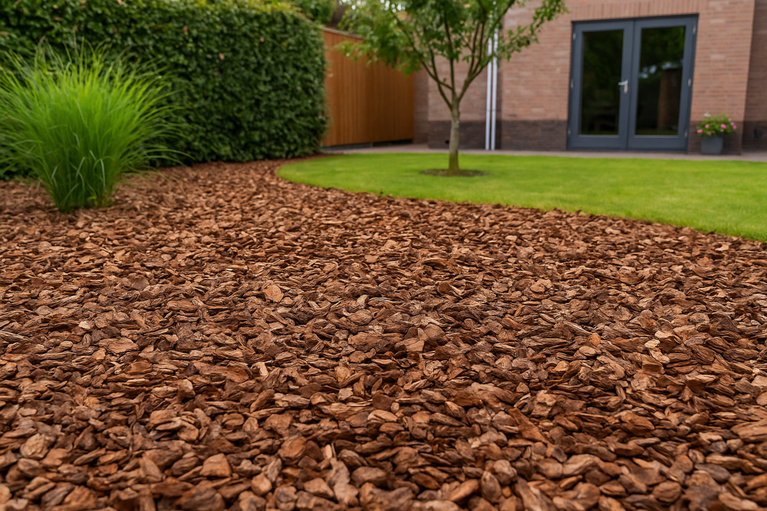
Wood chips or bark
Wood chips and bark offer good cushioning, especially for the lower fall height of an InGround or FlatGround trampoline. These natural materials also allow rainwater to drain easily, which helps prevent puddles or mud. Keep in mind that wood chips can compress over time, so you’ll need to refill the layer regularly to maintain its appearance and shock absorption.
Trampolines on legs
Trampolines on legs are positioned higher above the ground. This means you should consider the surface both underneath and around the trampoline.
Recommended surfaces for trampolines on legs:
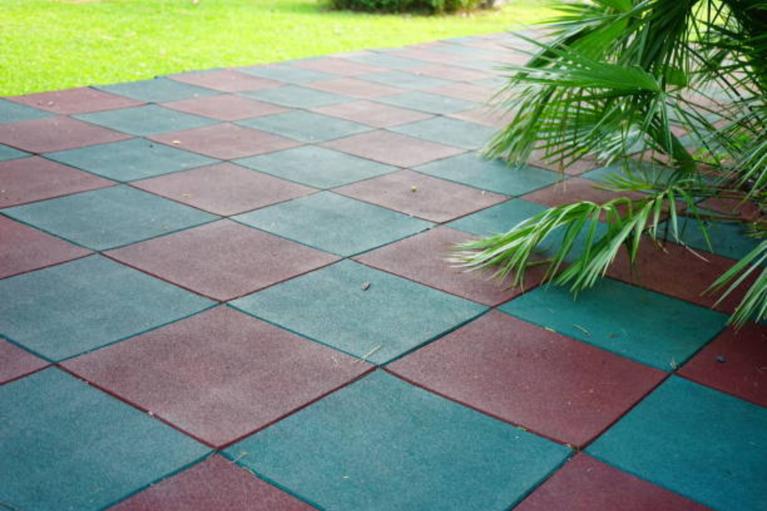
Rubber safety tiles
Rubber safety tiles are one of the safest surface options around an above-ground trampoline because they absorb impact. They also allow water to pass through and require minimal maintenance, helping to keep your garden tidy. You can choose from various thicknesses and colors to match the look of your lawn or patio.
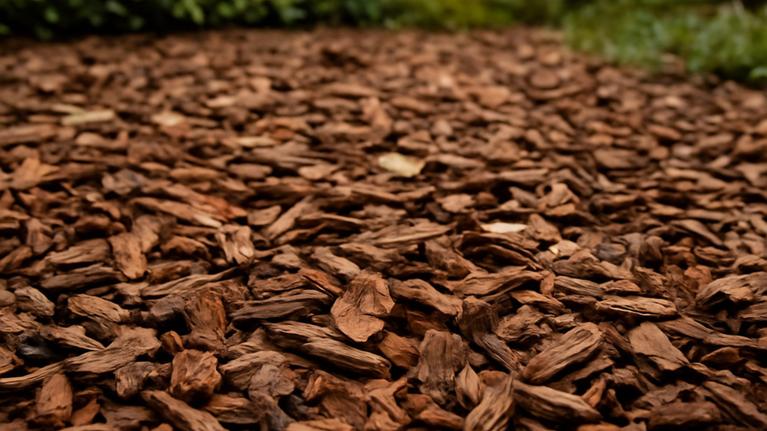
Wood chips or bark
A thick layer of wood chips offers a natural appearance and excellent shock absorption, which is important for higher trampolines. Make sure the layer is at least 15 centimeters or 6 inches thick to provide adequate protection. Because wood chips compress and decompose over time, it’s important to top them up regularly to maintain safety.
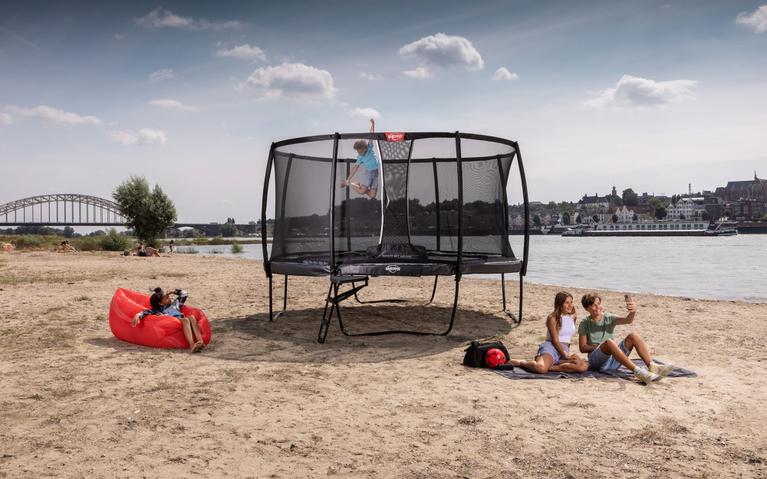
Sand (thick and evenly spread)
Sand is a soft surface that absorbs impact well if someone falls, especially in the trampoline’s entry zone. For above-ground trampolines, be sure to spread a thick and even layer to prevent displacement or unevenness. Regularly leveling the surface is essential to keep it safe and flat.
Combining surfaces
You can combine different materials to achieve the perfect balance between safety and style. For example:
• A ring of rubber tiles directly beneath the entry area.
• Artificial grass or wood chips around that for a natural look.
• Sand or bark as a decorative finish around InGround and FlatGround trampolines.
By combining materials smartly, you create a safe play area that fits perfectly with the look of your garden.
Ask a landscaper for advice
Every garden is different. That’s why it’s smart to get advice from a landscaper beforehand. This way, you can be sure the chosen materials suit your situation and preferences. A landscaper can assess:
• How level the surface is.
• Whether drainage is needed.
• Which materials best suit your use and desired look
This way, you can be sure your trampoline is both stable and safe.